When Water Returned Life to the Land
Ram Kripal, a farmer from marginalised community, living in Salarpur village near the Madhya Pradesh border in Mahoba district, owned two acres of uneven land covered with red gravel. For years, the land was considered completely barren. No crop had ever grown there, and villagers believed nothing ever would. Ram Kripal himself had accepted this reality. To survive, he worked as a sharecropper and daily wage labourer, while his own land lay unused. Eighteen other farmers in the village faced similar conditions.
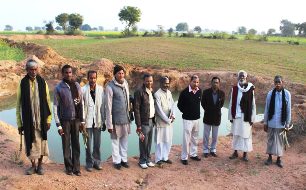
This perception began to change when the land was selected under the Integrated Natural Resource Management (INRM) project. A farm pond measuring 15 × 15 × 3 metres was constructed on Ram Kripal’s field. The excavated soil was used for bunding, dividing the land into three sections to retain moisture and improve soil structure.
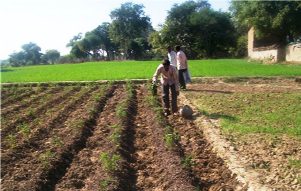
Even before the work was fully completed, the monsoon arrived. The pond filled to the brim, marking the first time water had ever stayed on the land. Encouraged by this change, Ram Kripal sowed til and urad during the Kharif season on a portion of the field and prepared the remaining area for Rabi crops, using ghanamrit as manure.
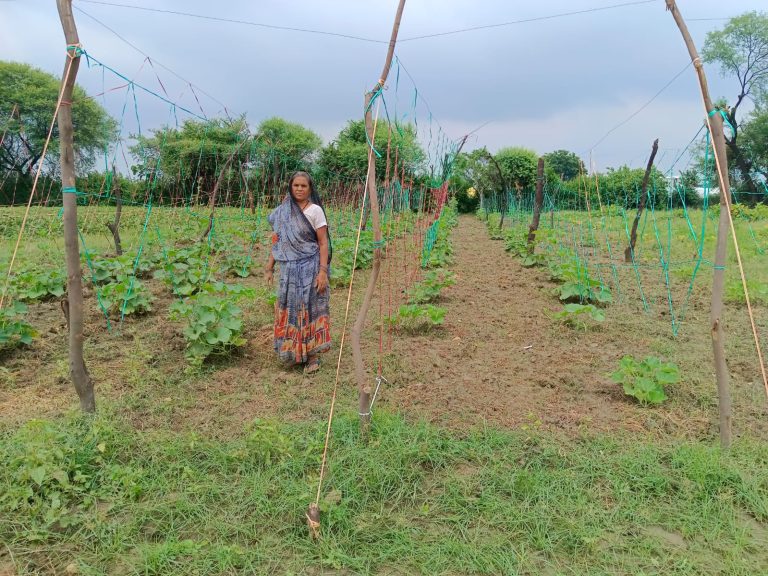
With assured water availability, he cultivated gram, wheat, and mustard in the Rabi season. The pond proved so effective that an 8-horsepower pump ran continuously for 13 hours, providing sufficient irrigation not only for his own fields but also surplus water for his neighbour, Kalka, who used it on three acres of land.
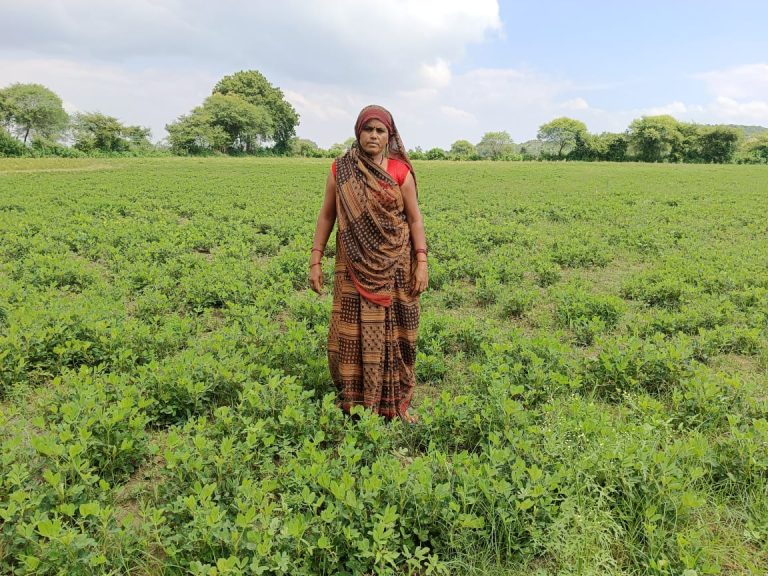
The transformation went beyond crops. During the pond construction, Ram Kripal and his family worked on their own land, generating employment at home instead of migrating for labour. Today, his fields carry healthy standing crops of gram, mustard, and wheat. He estimates a harvest worth ₹50,000—a remarkable shift from land that once generated nothing.
The impact is also reflected in land value. Earlier, the barren land was worth barely ₹40,000 per acre. With irrigation and cultivation, its value has risen to nearly ₹2 lakh per acre. What was once dismissed as wasteland has become productive agricultural land.
During an inspection, the MGNREGA nodal officer praised the initiative and assured support for further field levelling, strengthening the long-term sustainability of cultivation.
Ram Kripal’s story demonstrates how access to water, simple natural resource interventions, and farmer participation can reverse decades of deprivation. In Salarpur, water did more than fill a pond—it restored dignity, livelihoods, and hope, proving that even the most neglected land can be brought back to life.